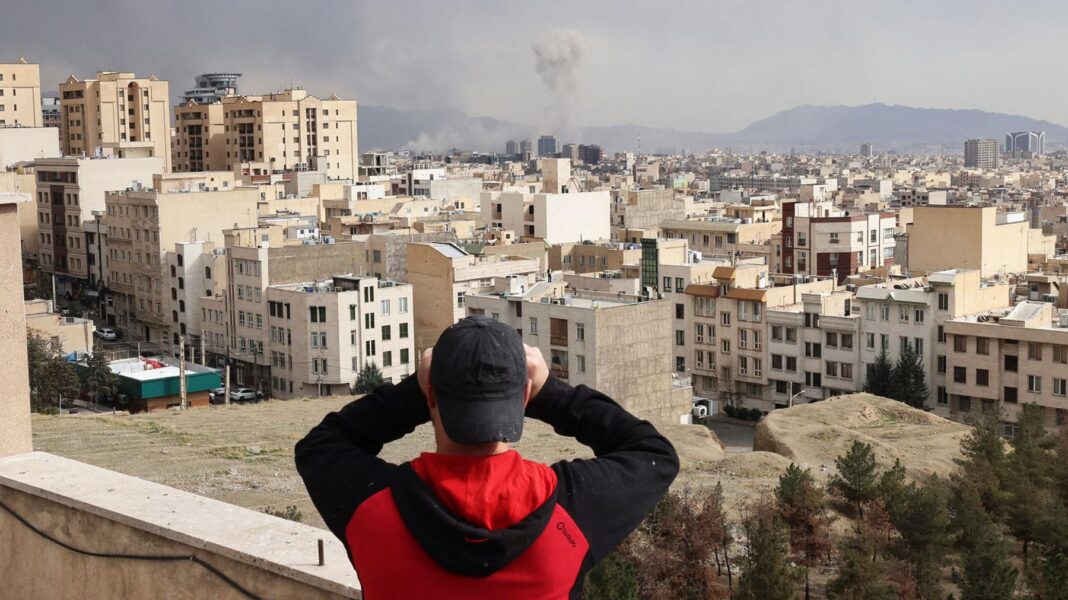















The conflict between Iran, the United States, and Israel marks a new point of global tension with effects that extend far beyond the Middle East. The escalation impacts the region through rising energy prices, inflationary pressures, diplomatic realignments, and a struggle among major powers for political and economic influence.
The military attack launched by the United States and Israel against Iran on the morning of Saturday, February 28, marked an international turning point. It is not merely a confrontation between distant countries: it is an event that redefines the global balance and will have real consequences for Latin America. Although the region is not directly involved, it is embedded in the same economic, energy, and political system that is now being shaken.
The major losses to the Iranian leadership include Ali Khamenei, who was the supreme leader and the country’s highest political, military, and religious authority, representing the most significant blow to the Iranian power structure in decades. Also killed were Mohammad Pakpour , commander of the Revolutionary Guard, the country’s most influential military force, and Abdolrahim Mousavi , Chief of Staff of the Armed Forces, responsible for coordinating all military operations. These losses directly affect the core of strategic command and weaken the regime’s control structure in the short term.
In just 36 hours, I responded with attacks against ten countries: Israel , Jordan , Saudi Arabia , the United Arab Emirates , Qatar , Bahrain , Kuwait , Oman , Iraq , and Cyprus , marking an unprecedented escalation in the region and increasing the risk of a full-scale confrontation. France , Germany , and the United Kingdom declared their readiness to attack Iran to defend their interests in the region.
This conflict divides the world into blocs. On one side, the axis led by the United States and its traditional allies. On the other, countries like Russia and China, which have criticized the operation and maintain strategic relations with Iran. This division is not only military; it is political, economic, and technological. Latin America is not immune to this reality.
Why does this happen?
The first thing to understand is that this attack is the largest in years of mounting tensions. Iran has built a network of influence in the Middle East and developed military capabilities that its adversaries consider a threat. The United States, along with Israel, decided to act to weaken that capability.
Since the 1979 Islamic Revolution, Iran has been ruled by a religious regime that concentrates power in the Supreme Leader and restricts political freedoms, the opposition, and women’s rights. In January 2026, the country experienced one of the largest waves of protests in decades, fueled by the economic crisis and rejection of the political system. The repression was extremely violent.
Some NGOs estimate that the death toll exceeded 30,000 due to the use of firearms against protesters and mass arrests. These protests reflect a deep social discontent that had been building for years in the face of a lack of freedom and harsh political and economic conditions.
A new phase
Latin America has also been a region of Iranian influence. The Ayatollah’s Islamic regime forged close ties with the governments of Venezuela, Cuba, Nicaragua, and Bolivia during the early years of the century. It deployed a media support network to disseminate messages favorable to its government, using platforms such as HispanTV, its Spanish-language news channel.
Furthermore, there is a direct impact on the everyday economy. Iran is a major player in the global energy market. Following the attack, Iranian forces and allies blockaded the Strait of Hormuz, through which 20% of the world’s oil and gas passes. Three ships were attacked in two days.
This can translate into more expensive gasoline, increased transportation costs, and inflationary pressure. In other words, a crisis in the Middle East can be felt in the wallet of any Latin American citizen.
The attack on Iran is not just another international news story. It is a sign that the global order is changing . And Latin America, whether it likes it or not, is part of that change.
How does this affect trade and relations in Latin America?
- Oil prices: Global cost: Crises in the Middle East often drive up the price of crude oil, which translates into more expensive gasoline and electricity in the region.
- The United States’ position and its pressure on the region: it remains the main financial and political partner of many Latin American countries. If confrontation escalates, Washington may request diplomatic support or restrict relations with countries close to Iran.
- The role of China and Russia in Latin America : China is the main trading partner of several Latin American countries, and Russia maintains political and energy ties with some governments.
- Economic impact : inflation, trade, and growth. Wars generate financial uncertainty. This can lead to: a stronger dollar, decreased investment, and slower economic growth. Latin American economies, mostly commodity producers, are often quickly affected.
- Reactions in forums: Votes and pronouncements by Latin American governments at the UN, OAS, and other forums. Their positions reveal which countries align themselves with the US and its allies, which with powers like China or Russia, and which maintain neutrality.
The conflict between Iran, the United States, and Israel is neither an isolated nor a distant event. It is a clear sign that the world is entering a new phase of global tensions, where the decisions of major powers have effects felt even in the most remote corners of the planet. Latin America, while not a direct protagonist, is part of this international landscape. Its governments, economies, and societies are interconnected through energy, trade, and diplomacy.
In short, although this conflict is taking place far away, its repercussions reach the region. Following this issue is crucial in today’s world: it helps us understand how global affairs impact our own community. Critically informing ourselves (with reliable sources, contrasting data, and without sensationalism) will allow us to participate thoughtfully in public debates and decisions that will define our future. (https://dialogopolitico.org/agenda/analisis/como-impacta-conflicto-iran/)