














Estimated reading time: 5 minutes
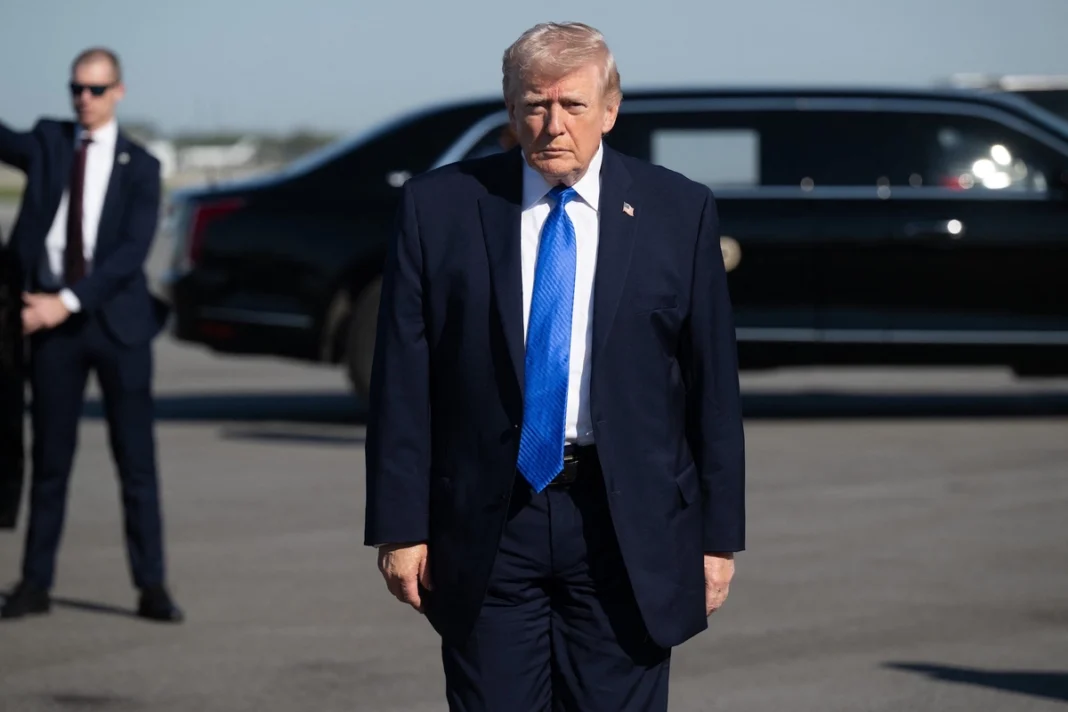
U.S. President Donald Trump on March 26 warned Iran to “get serious” about negotiations to end the war, accusing Iranian officials of falsely downplaying ongoing contacts and cautioning that failure to engage could lead to severe consequences.
In a post on social media, Trump described Iranian negotiators as “very different and ‘strange,’” stating they were privately pushing for a deal while publicly denying meaningful talks.
“They are ‘begging’ us to make a deal … and yet they publicly state that they are only ‘looking at our proposal.’ WRONG!!!” Trump wrote, adding, “They better get serious soon, before it is too late … and it won’t be pretty!”
Trump’s post reflects ongoing differences in rhetoric between Washington and Tehran over whether talks are actually taking place, as the war continues to intensify across the region.
Speaking a day earlier at a National Republican Congressional Committee dinner, Trump said Iranian leaders were actively seeking a deal but were reluctant to acknowledge it publicly.
“They want to make a deal so badly, but they’re afraid to say it,” Trump said, adding that Iranian officials feared internal backlash as well as U.S. retaliation.
Speaking at the start of a March 26 Cabinet meeting, Trump said he wanted to “set the record straight” that it’s the Iranian side that is pushing for a deal, despite any claims to the contrary.
“Anybody would know they’re talking,” he said. “They’re not fools, they’re very smart actually in a certain way. And they’re great negotiators. I say they’re lousy fighters, but they’re great negotiators.”
Iranian officials have consistently denied that direct formal negotiations are taking place. Iranian Foreign Minister Abbas Araghchi said that exchanges conducted through intermediaries do not constitute talks with Washington.
“Messages being conveyed through our friendly countries and us responding by stating our positions or issuing the necessary warnings is not called negotiation or dialogue,” Araqchi said on state television. “It is simply an exchange of messages through our friends.”
Israeli sources briefed on the discussions who spoke to Epoch Magazine Israel said that U.S. officials put forward a 15-point proposal to Iranian figures via intermediaries. The sources said that the plan included such demands as Iran halting uranium enrichment, dismantling key nuclear facilities, curbing its missile program, and stopping supporting regional proxies in exchange for sanctions relief.
Speaking at Thursday’s Cabinet meeting, U.S. special envoy to the Middle East Steve Witkoff confirmed that the United States had conveyed the 15-point plan to the Iranians, though he did not provide details.
“We have, along with your foreign policy team, presented a 15-point action list that forms the framework for a peace deal,” Witkoff said.
“This has been through the Pakistani government, acting as the mediator, and this has resulted in strong and positive messaging and talks.”
Witkoff added that Iran is “looking for an off-ramp” following Trump’s threat over the weekend to order strikes against Iranian power plants.
“Indications that you are willing to listen to peace proposals have been well received,” Witkoff added.
Talks in Question
The White House has maintained that discussions are ongoing, while declining to confirm specific details of any proposed agreement. White House press secretary Karoline Leavitt
said during a March 25 news briefing that reports of a detailed U.S. plan should be treated cautiously.
“The White House never confirmed that full plan,” Leavitt said, adding that “there are elements of truth to it” but that some reporting on it was “not entirely factual.” She said that talks remain ongoing and that the administration would not disclose details publicly.
Leavitt reiterated that Trump prefers a diplomatic resolution but warned of further military action if Iran refuses to compromise.
“There does not need to be any more death and destruction,” she said. “But if Iran fails to accept the reality of the current moment … President Trump will ensure they are hit harder than they have ever been hit before.”
She added that Trump is prepared to “unleash hell” if Iran fails to cooperate on a deal, adding that Tehran has already suffered major military losses, including damage to its senior leadership and key defense capabilities.
Iranian officials have pushed back, with a senior Iranian political-security official telling state media that Tehran had rejected a U.S.-backed proposal and would only end the war on its own terms.
“Iran will end the war when it decides to do so and when its own conditions are met,” the official said.
The Iranian official outlined five conditions for a cease-fire, including an immediate halt to attacks, guarantees against future conflict, payment of war reparations, an end to fighting across all fronts—including involving regional proxy forces—and international recognition of its claims over the Strait of Hormuz. The official also signaled that no direct negotiations would take place unless those conditions are met.
Iran’s counterproposal has been officially conveyed to the U.S. side by mediators on Wednesday night, and Tehran now awaits a response, according to the Tasnim News Agency, which is affiliated with the Islamic Revolutionary Guard Corps.
Iranian Parliamentary Speaker Mohammad Bagher Ghalibaf had rejected U.S. claims of substantive talks, describing Trump’s claims of ongoing negotiations as “fake news” calculated to manipulate financial and oil markets. An Iranian military spokesman said Washington was effectively negotiating with itself.
Despite the denials, Trump has repeatedly suggested progress, saying earlier this week that “major points of agreement” had been reached in prior contacts, including commitments related to nuclear weapons.
The war has disrupted global energy markets, sending oil prices higher before retreating on hopes of a diplomatic breakthrough. Prices have since stabilized around the $100-per-barrel level amid ongoing uncertainty over supply disruptions, the prospect of further escalation, and the status of the talks. (The Epoch Times)