















Estimated reading time: 9 minutes
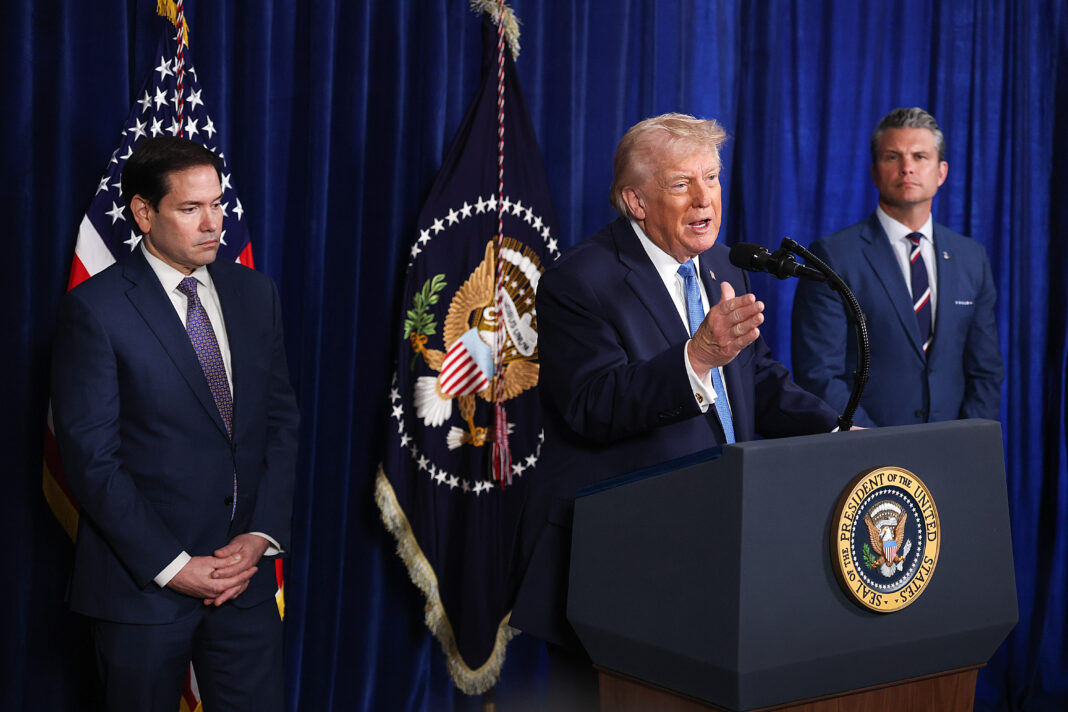
EEUU. President Donald Trump addressed the nation on Saturday morning following the successful capture and extradition of Venezuelan leader and suspected narcotrafficker Nicolas Maduro and his wife, Cilia Flores.
The president, sharing details of the joint military and law enforcement operation, announced that the United States will run Venezuela until the country is ready for a transition of power, and hinted that Cuba, a neighboring autocratic regime, could be next.
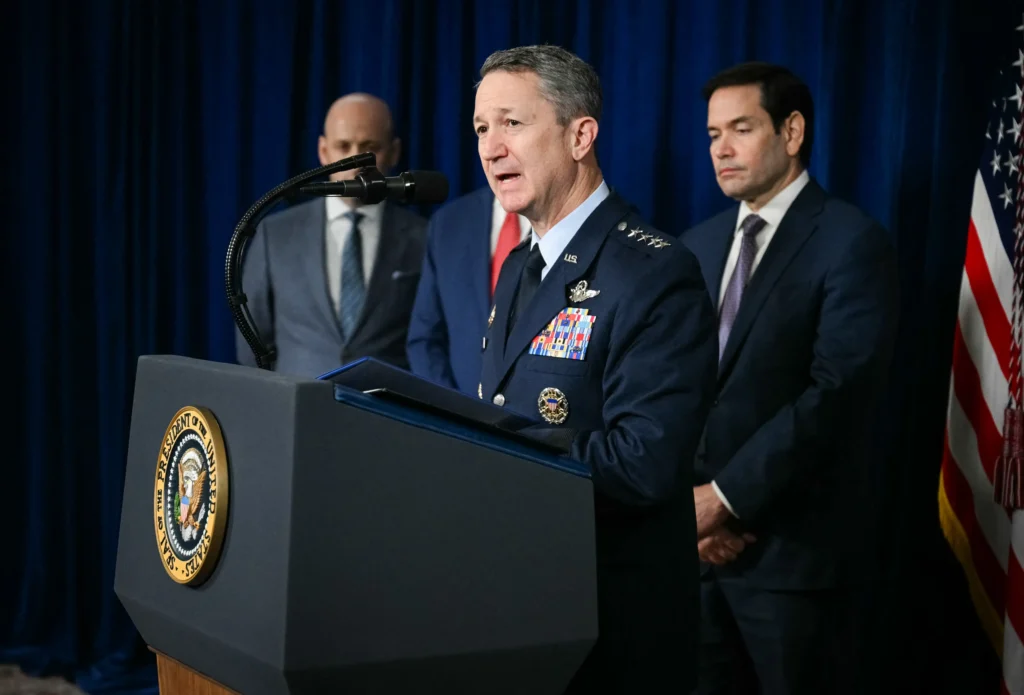
Secretary of War Pete Hegseth, Secretary of State Marco Rubio, and Chairman of the Joint Chiefs of Staff Gen. Dan Caine offered more insight into the operation before the president addressed a number of questions from the press gathered at his Mar-a-Lago estate in Florida.
US to Run Venezuela Until Transition
The United States’ mission in Venezuela isn’t over with Maduro’s capture, but just beginning.
“We’re going to run the country until such time as we can do a safe, proper, and judicious transition,” Trump said.
“We don’t want to be involved with having somebody else get in, and we have the same situation that we’ve had for the last long period of years.
“We have a group of people, talking to people,” to lead a transition government in Venezuela, he said.
“We’re designating various people, and we’re going to let you know who those people are that would run Venezuela.”
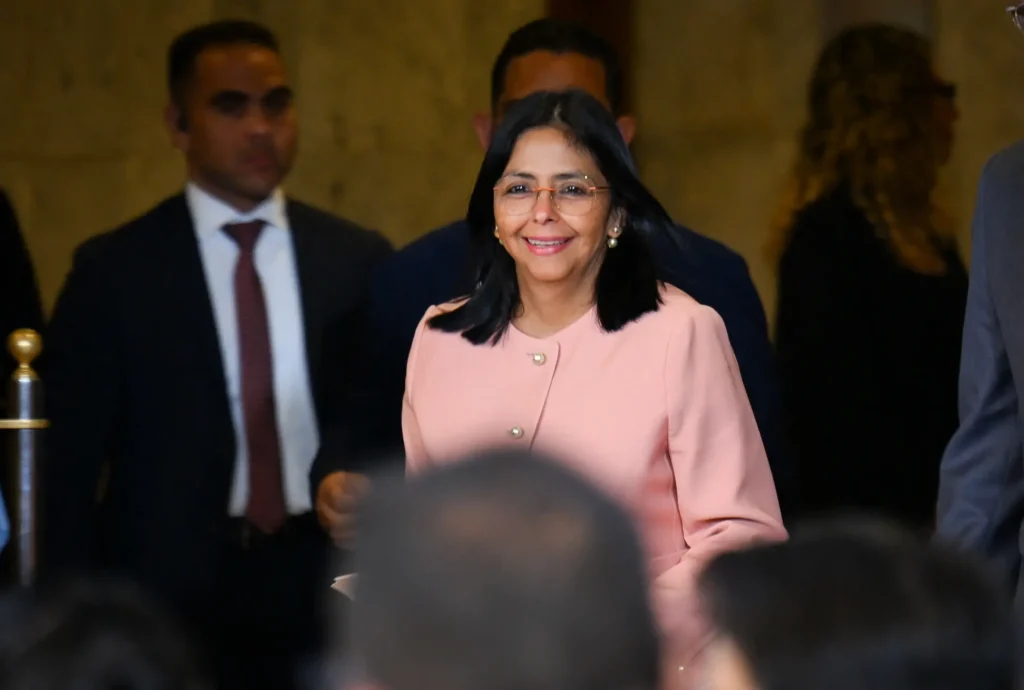
Trump said Rubio “just had a conversation” with Venezuelan Vice President Delcy Rodriguez and “she’s essentially willing to do what we think is necessary to make Venezuela great again.”
“The biggest beneficiaries will be the people of Venezuela,” he added.
US Will Tap Venezuela’s Oil Reserves
Trump previewed heavy U.S. investment in the nation’s oil industry to rebuild infrastructure.
“We’re going to have our very large United States oil companies, the biggest anywhere in the world, go in, spend billions of dollars, fix the badly broken infrastructure, the oil infrastructure, and start making money for the country,” he said during the press conference.
He said that he expected a better oil infrastructure to yield higher amounts for sale.
“We’ll be selling oil, probably in much larger doses, because they couldn’t produce very much because their infrastructure was so bad,” he said.
Venezuela has one of the largest oil reserves in the world, according to OPEC, and its role in supplying oil to foreign nations could influence the United States’ geopolitical advantage in the coming years. One of the United States’ top geopolitical adversaries, China, also consumes large amounts of Venezuelan oil, receiving 80 percent of total exports, according to Reuters, which cited data from PDVSA, Venezuela’s state-owned oil and gas company.
When asked about China and other countries, Trump said that he intended to sell oil to foreign nations. “We’re going to sell it to them. … We’ll be selling large amounts of oil to other countries,” he said.
Threat of 2nd Attack
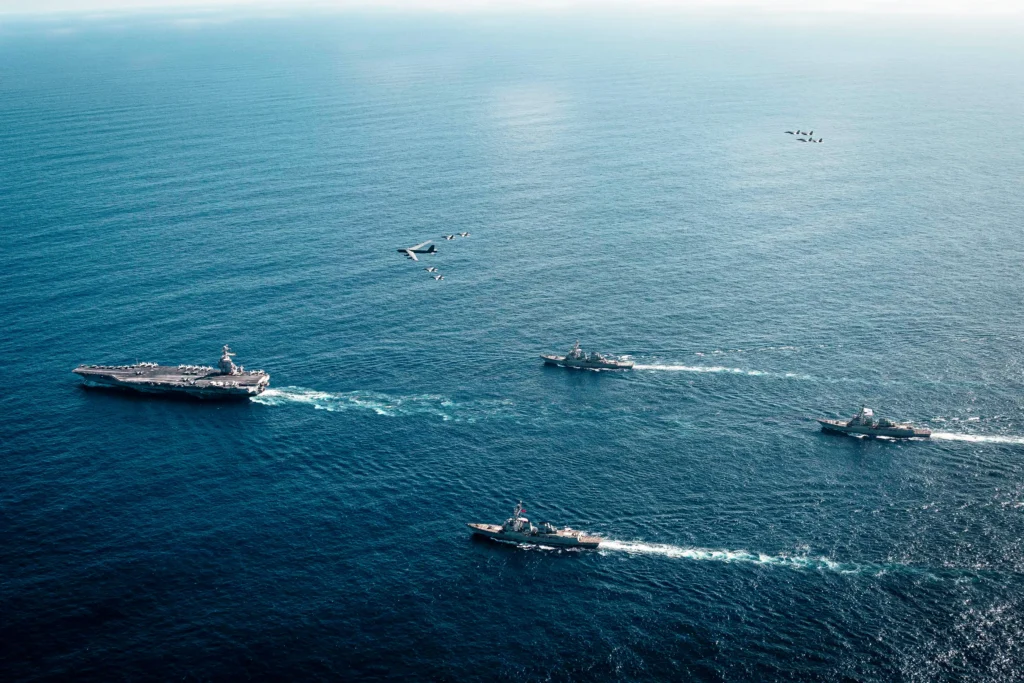
Waiting for orders are 12,000 sailors and Marines deployed in the region as part of the Operation Southern Spear task force spearheaded by the USS Gerald Ford, the world’s largest aircraft carrier, and the USS Iwo Jima, an amphibious assault ship. It is the largest Navy battle group in the Caribbean since 1965 and the U.S. military’s most significant action in the region since the invasion of Panama in 1989.
There are more than 2,200 Marines on Iwo Jima trained to lead amphibious assaults to capture defended objectives, but it would require larger Army units to provide the “boots on the ground” needed to maintain order if there is opposition.
“We’re not afraid of boots on the ground if we have to,” Trump said. “We are ready to stage a second and much larger attack if we need to do so.”
“We actually assumed that a second wave would be necessary,” he added.
“But now it’s probably not. The first wave, if you’d like to call it that, the first attack was so successful, we probably don’t have to do a second, but we’re prepared to do a second wave, a much bigger wave, actually.”
“You may need something, but not that much,” Trump said. “Our presence will be in oil, in taking oil out of the ground.”
Operation Executed at Trump’s Direction
Trump said the operation was carried out at his discretion, and he emphasized that he would continue to make similar decisions to protect American citizens.
“I will never allow terrorists and criminals to operate with impunity against the United States,” he said.
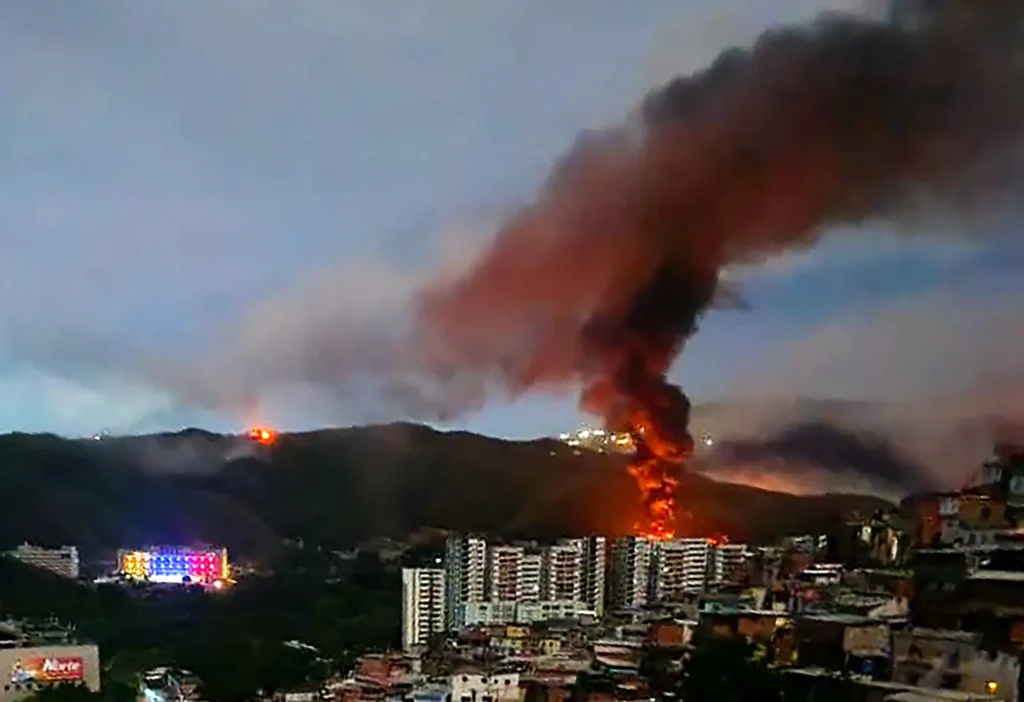
“This extremely successful operation should serve as warning to anyone who would threaten American sovereignty or endanger American lives.”
The president greenlit the operation at approximately 10:46 p.m. on Jan. 2. The extraction force arrived at Maduro’s compound at 1:01 a.m. on Jan. 3, and the force was back over the water with Maduro and his wife in custody by 3:29 a.m.
Gen. Caine detailed a massive, well-rehearsed integrated force that included more than 150 aircraft and elements of the Space Force, Navy, Marines, and intelligence agencies.
‘A Spectacular Assault’
The president described the operation as “a spectacular assault” that had not been seen since World War II.
Called “Operation Absolute Resolve,” the operation involved multifaceted integration across the armed forces’ branches.
Caine highlighted the level of integration and complexity that was on display.
“This mission was meticulously planned, drawing lessons from decades of missions over the last many years, decades, many missions over these last many years,” Caine said.
“This was an audacious operation that only the United States could do. It required the utmost precision and integration within our joint force.”
Weather was also a factor, but the general said it cleared just enough for only the most-skilled pilots to execute the mission.
Caine said that the president was focused on “choosing the right day to minimize the potential for civilian harm and maximize the element of surprise, and minimize the harm to the indicted personnel.”
U.S. forces had to return fire in multiple self-defense engagements while the Joint Air Component worked to dismantle and disable Venezuela’s air defense systems.
U.S. forces closed in on Maduro at his compound as he attempted to flee to a safe room, extracting him under enemy fire.
One of the U.S. helicopters was hit, but remained operational.
No Troops Killed, No Equipment lost
Caine confirmed that no American troops were killed and no equipment was lost during the operation.
Despite coming under fire, only one aircraft was hit but remained flyable. All aircraft came home.
“I am immensely proud today of our joint force and filled with gratitude to represent them here today. There is simply no mission too difficult for these incredible professionals and the families that stand by them and support them as we stand here this morning, our forces remain in the region at a high state of readiness,” Caine said.
Maduro Was Given Many Chances
The Trump administration repeatedly portrayed the strike as the result of Maduro’s refusal to take multiple opportunities to change course. The operation came after years of pressure, including during Trump’s first term, on the Maduro regime.
Maduro has denied involvement in any criminal activity.
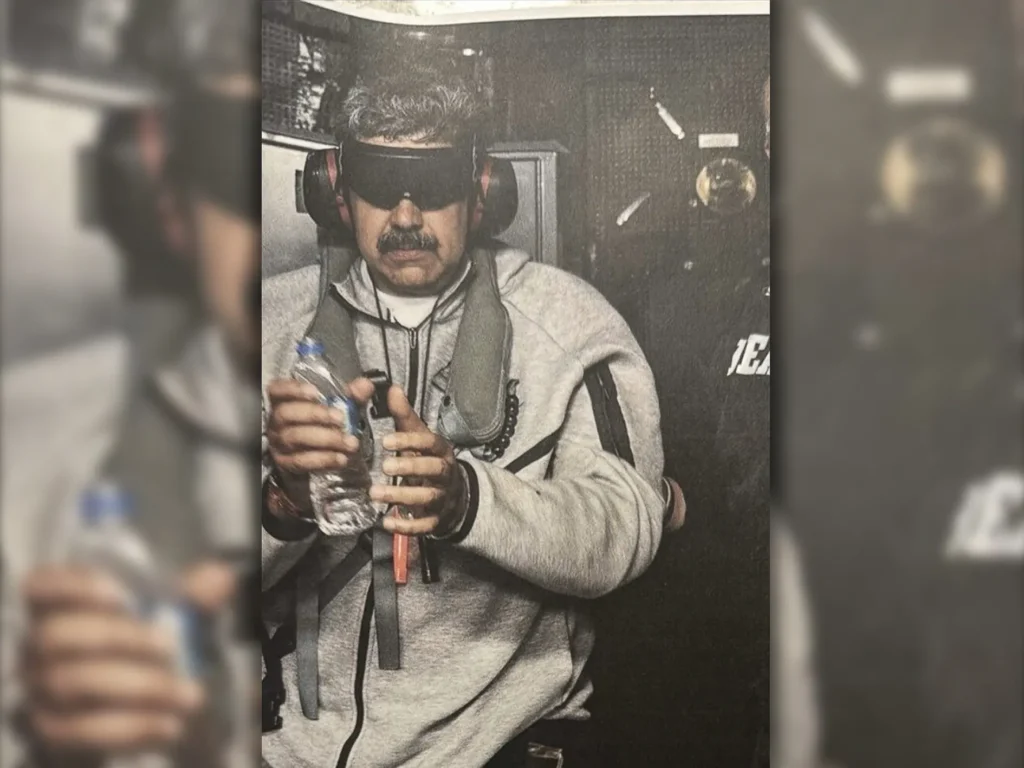
In the months leading up to the strike in Caracas, the Trump administration has attacked drug boats in the region, imposed an oil blockade, and issued multiple rounds of sanctions.
“Nicolás Maduro had his chance, just like Iran had their chance—until they didn’t and until he didn’t,” Hegseth said during the press conference at Mar-a-Lago.
Vice President JD Vance similarly posted on social media that “the president offered multiple off ramps, but was very clear throughout this process: the drug trafficking must stop, and the stolen oil must be returned to the United States.”
“Maduro is the newest person to find out that President Trump means what he says,” Vance said.
Monroe Doctrine
In November, Trump issued a new national security strategy to “reassert and enforce the Monroe Doctrine to restore American preeminence in the Western Hemisphere,” describing it as the “Trump Corollary” to President James Monroe’s 1823 policy that declared the Western Hemisphere a distinct U.S. sphere of influence.
Under Trump’s revision, the president maintains he can authorize the Pentagon to engage in “non-international armed conflict” with terrorists and, since Maduro doesn’t represent Venezuela’s legitimate government, such action isn’t war with a nation state requiring congressional endorsement.
“After years of neglect, the United States will reassert and enforce the Monroe Doctrine to restore American preeminence in the Western Hemisphere, and to protect our homeland and our access to key geographies throughout the region,” the “Trump Corollary” states.
“We will deny non-Hemispheric competitors the ability to position forces or other threatening capabilities, or to own or control strategically vital assets, in our Hemisphere.”
Cuba Next?
Rubio suggested Cuban government officials should be worried following Saturday morning’s strike in Venezuela.
“If I lived in Havana and I was in the government, I’d be concerned at least a little bit,” Rubio said during the Jan. 3 press conference detailing the early morning attack.
Rubio suggested that Cuba was run by “incompetent” men who have allowed the economy to be in “total collapse” while they attempted to have a larger presence in Venezuela.
“By the way, all the guards that helped protect Maduro, this is well known, their whole spy agency, all [of] that was full of Cubans.”
Trump confirmed the United States is monitoring Cuba.
“I think Cuba is going to be something we’ll end up talking about, because Cuba is a failing nation right now, very badly failing nation, and we want to help the people,” Trump said.
Earlier on Saturday, Cuban leader Miguel Díaz-Canel Bermúdez called for international reaction against the operation to capture Maduro, calling it a “criminal attack.”
The Epoch Times




















While Mexico’s President Claudia Sheinbaum has confirmed oil shipments to Cuba as part of contracts and humanitarian aid, could this be a strategic move to influence regional politics, as suggested by some analysts? (Read more about this topic in the Other News Archives on Periódico Digital Centroamericano y del Caribe, and delve deeper into geopolitical analysis on [this insightful website]